Renaissance Throwbacks
What makes the Renaissance so interesting?
During the Italian Renaissance, people rediscovered Greek and Roman art. It drew inspiration from humanism, realism, anatomy, and naturalism. While people were still trying to live, we had upcoming artists finding their own style of their art. Like one-point perspective, proportion, anatomy modeling, chiaroscuro, and even adding 3 scenes in 1 painting. The Renaissance is associated with the 14th and 16th centuries. During that time some people were still so religious that many artists would make paintings of Madonna.
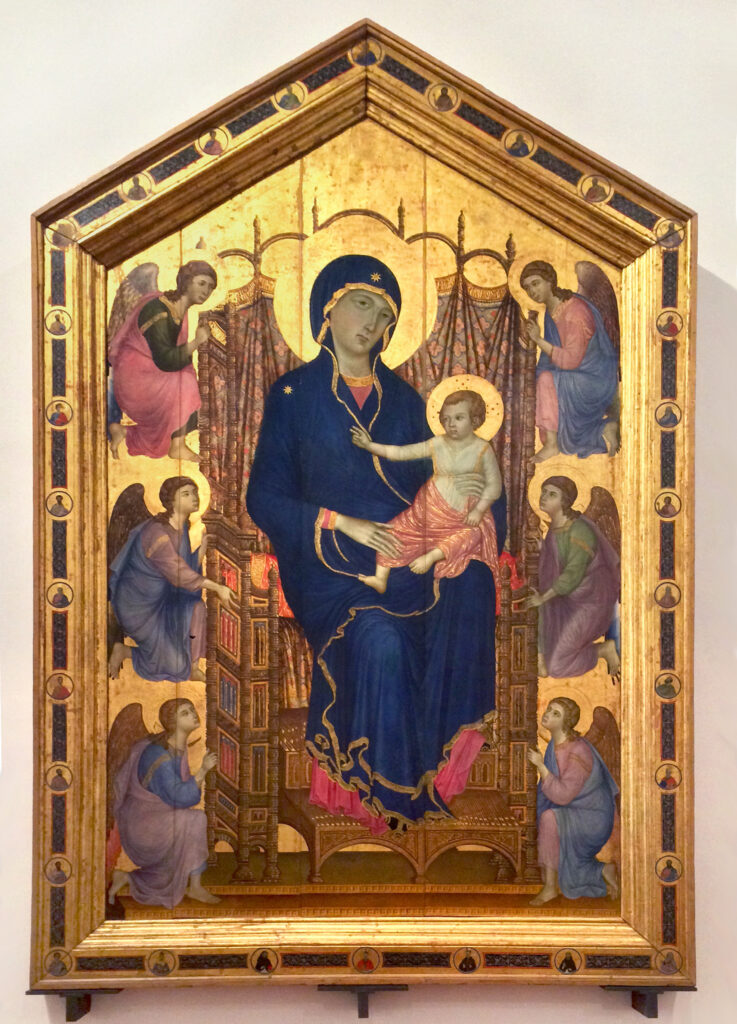
An example of an artist during that time was Duccio di Buoninsegna, who painted several representations of the Madonna and her child. Through his paintings, he helped form the Italian tradition of showing Mary and Jesus in a majestic and gentle way. Each stroke has a soft painting with soft heavenly colors, with Madonna half of the time having blue clothing to symbolize her purity.
Duccio di Buoninsegna, Madonna and Child, 1290–1300, tempera and gold on wood panel—Metropolitan Museum of Art
The way paintings were represented in the Renaissance, they had a pattern, a theme, and an idea, where Duccio would make Madonna have a loving, calm face. Making a painting so humanistic, including Jesus, even though he is seen as symbolic, Duccio would paint him playfully and like a curious child. Many of his paintings had a gold background or soft light symbolizing heaven and often had Madonna and Jesus with a circle layout behind their heads to represent halos. If a random person came up to Duccio’s paintings of Madonna, there would be a 50% chance they would think they were symbolic. Duccio uses a lot of symbolizing, as do many artists.
One of those artists was Sandro Botticelli. Botticelli used symbols in his paintings to show deeper meanings about beauty and love. The Birth of Venus painting tells a story of Venus, a goddess who was born from the sea. In the painting, it’s giving the vision of Venus coming out of the water and standing on a big shell, naked but not worried. The wind gods on the left are gently blowing her forward to the land. On the right, a woman is waiting to cover her with a cloak. The whole scene shows the moment beauty and love enter the world. The wind gods are blowing Venus toward the land because they are guiding her from the sea to begin her life as the goddess of love. With soft colors, soft strokes, and soft poses, it shows metaphor throughout all the representations of the birth of Venus; it doesn’t represent religion.
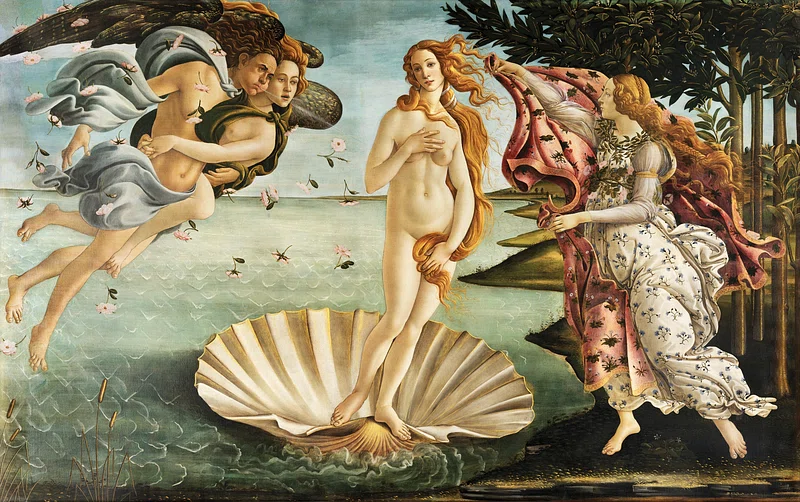
The Birth of Venus was so popular that it is referenced in much modern pop culture today. But why was it so popular? Why does the girl on the shell get so many pop culture references, more than Madonna and her child?
Sandro Botticelli, The Birth of Venus, 1483-85, Tempera on panel – The Uffizi Gallery, Florence
Well, because she represents beauty, freedom, and self-identity, while the paintings of Madonna, people are treating it with more caution in an effort to not offend worshipers. Venus is a secular figure. This makes it easy for artists and companies to use her image in fun or trendy ways without upsetting anyone. The representation behind Venus makes her easily turned into a fashion reference, meme, or ads. While Madonna and her child symbolize purity and motherhood, which is very respected, so if it were referenced in pop culture, people would be canceling. Speaking of cancel in pop culture, Beyoncé has been around for a while and has yet to be canceled.
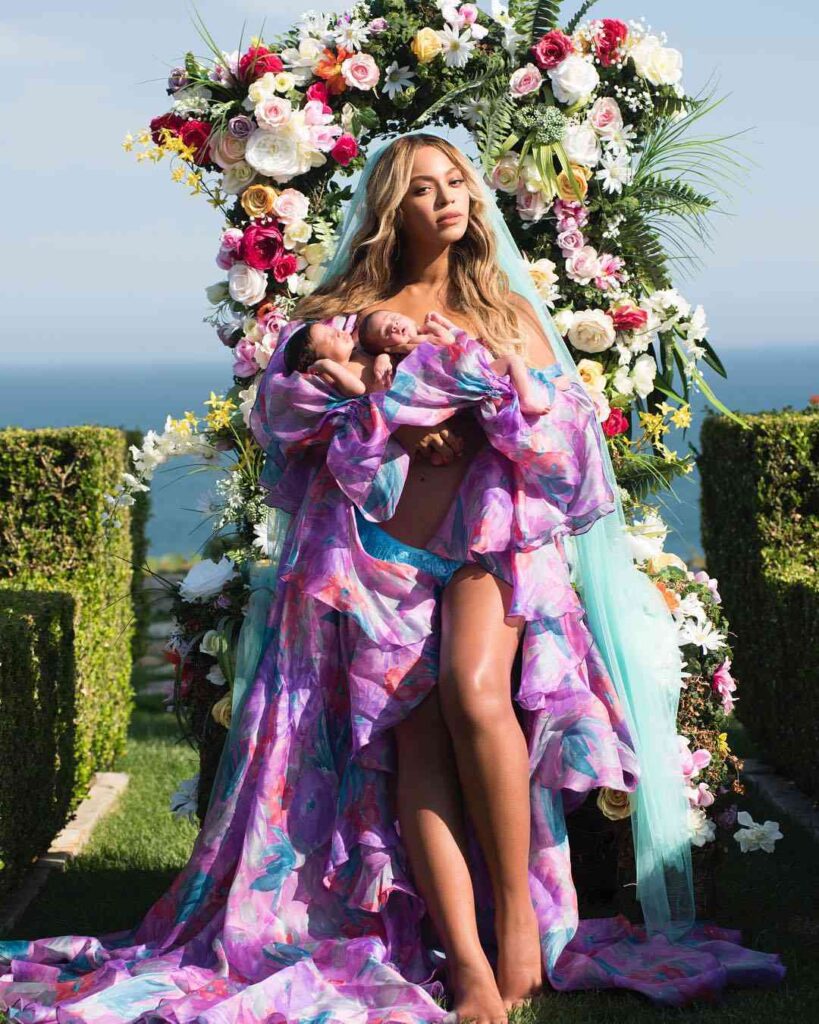
Beyonce references Botticelli’s The Birth of Venus painting by recreating a photo back in 2017. In the photo, Beyoncé is shown majestic with the flow of the hair, just like Venus. The blooming flowers shown in Beyoncé’s picture are also happening in Botticelli’s painting, not with the layout of the flowers shown in the picture, but with the repetition when the wind of gods was shown blowing Venus into the land and you could see flowers in the wind.
Beyoncé Giselle Knowles-Carter, Sir Carter and Rumi 1 month today, July 14, 2017, Photograph, Instagram
While the lady on the right was wearing clothing with a repetition of flowers. Also, the background of the picture is the ocean, and Beyoncé is wearing a puffy dress that looks like scales that reference the shell that Venus is standing on. Along with that, Beyoncé holds her 2 newborn babies, representing her twins, who are the birth of love, like she’s saying her babies are the most beautiful thing in the world, just like how Venus is representing love.
The movements that change art!
Two art movements began to emerge in Europe in the 17th and 18 centuries, an era of art where people had their own opinions. Some believe that there was art that was too strict or too rebellious or challenged old beliefs. The reaction of some people would bring a big change to society during that time. Those eras that I’m talking about are Neoclassicism and Romanticism. Neoclassicism was an art movement that had a clean, balanced style. It was more focused on ancient Greek and Roman ideals and showed a lot of male dominance, while romanticism was more centered around emotion, individuality, and rebellion. Both had the Enlightenment, and one led to Enlightenment values, but Romanticism was the opposite because they wanted to create a dream world. Both movements used a unique style with different moral views, ideas, and knowledge.
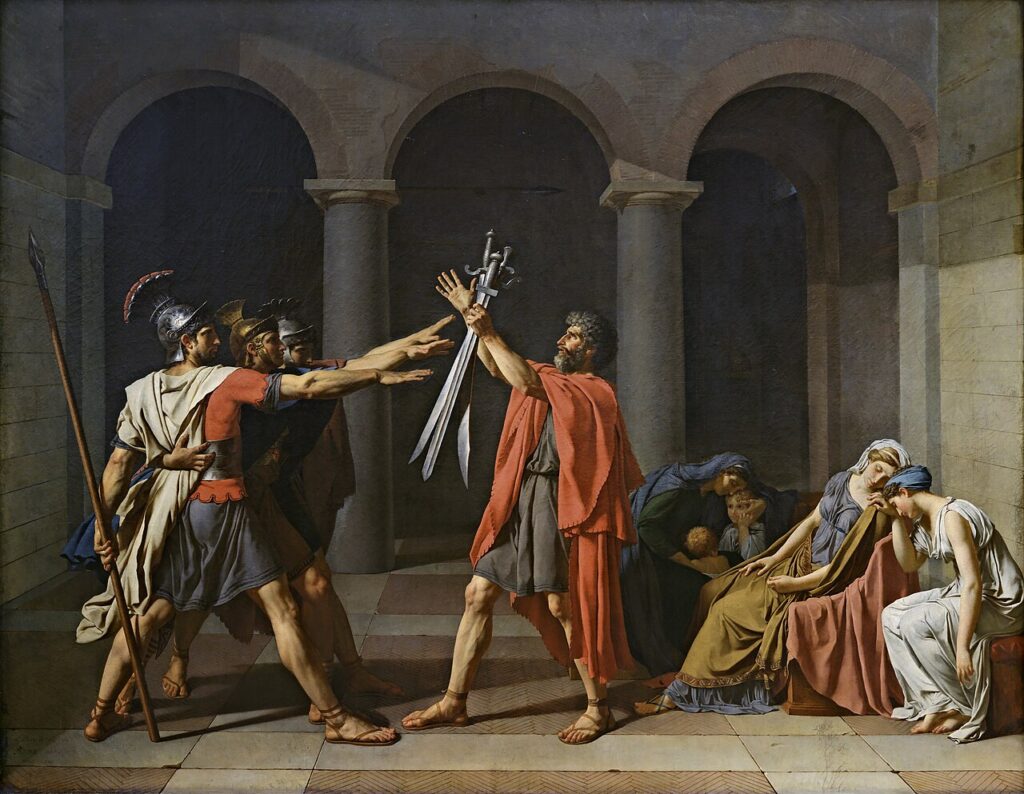
Neoclassical art would be more focused on perfection, be more organized, have a clearer balance, have clean brushstrokes, and more importantly, have a direct story. An example of an artwork is the Oath of the Horatii, done by a French painter named Jacques Louis David, and it was painted in 1784. The pain tells a story of three brothers that are swearing their oath to the swords. Meanwhile, on the right hand side of the painting,
you can see the wives showing sadness because they don’t want their husbands going to battle. this painting there are depth, perspective, three dimensions, and arches. This painting was and still is the most popular painting, thanks to Jacques Louis David.
Piet Mondrian, Composition with Red, Blue, and Yellow, 1930, oil on canvas
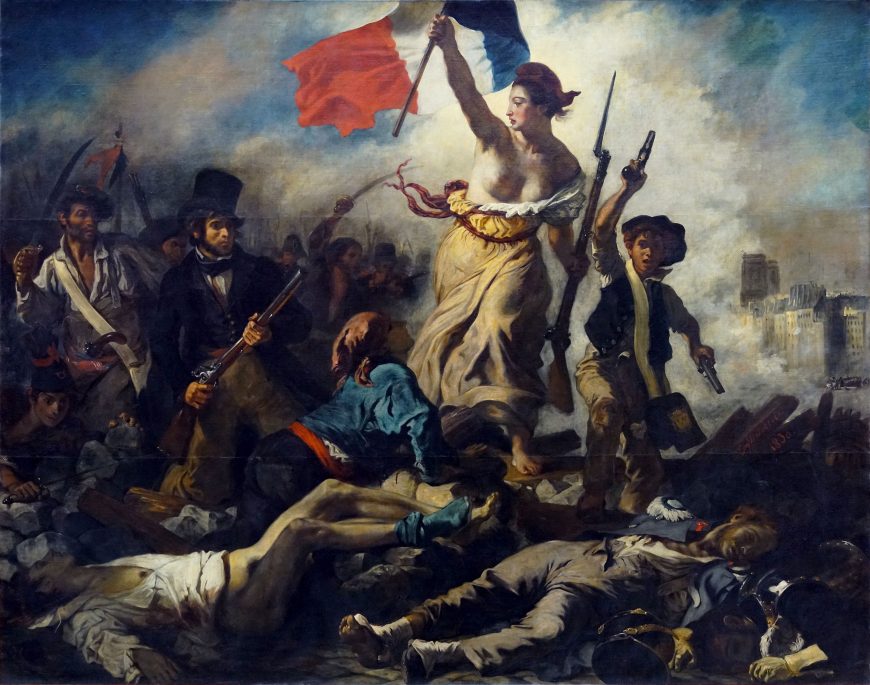
Romanticism art was more focused on nature and emotion. By capturing the beauty of it, this art style would be dreamy, expressive, dramatic, and have a lot of warm tones. An example of a Romanticism painting is Liberty Leading the People. This was painted in 1830 by Eugène Delacroix. In this painting it shows Liberty leading the people she’s waving the tricolor flag of the French Revolution. Below there are dead bodies, and the background shows men and women leading in the revolution. Liberty waving the flag symbolizes leading the people to victory.
She is also holding a rifle, encouraging the man and woman of the revolution to move over the rubble and take the streets and revolt. This painting shows a lot of strong emotion because each person in that painting is fighting for the same freedom no matter the background of the person.
Piet Mondrian, Composition with Red, Blue, and Yellow, 1930, oil on canvas
These two eras, Neoclassicism and Romanticism, were a big cultural fight because they shaped how people thought, felt, and understood the world. Neoclassicism shapes the outside of the world, like the buildings and politics, in order. Romanticism shapes the inner world, like emotion, imagination, and creativity. Both movements changed art and culture in huge ways.
Neoclassicism has organized, clear, and cool tones. I don’t like how it’s more centered on male dominance and obedient women. While Romanticism shows more women powerful, emotional, wild, free, or heroic, I don’t like how the warm tones and darkness of the painting can be messy. I don’t hate the art movements because they just have their imperfections and perfections.
What can be called art?
What does creating art using artificial intelligence have in common with creating simple shapes and colors? They both spark controversy. Some people think it looks too easy or like anyone could do it, so they question if it should “count” as real art. Others feel like the artist isn’t really doing the work either because a computer helped or because the art looks super simple. Since these styles break the usual rules of what art is supposed to look like, they cause a lot of debate. Modern art is art made from the late 1800s to around the mid‑1900s, when artists started breaking old rules about what art should look like. Modern artists didn’t stick to traditional styles like realistic painting or religious scenes. Instead, they tried out new ideas, techniques, and ways to express themselves. They used bold shapes, unusual colors, and personal or social messages. Modern art doesn’t have one single definition because different artists had different goals, but they broke something traditional and explored what art could be.
One of the art movements is De Stijl, which appeared in 1930. “De Stijl” meant “the style,” and the movement aimed to express a universal, balanced way of seeing the world. Theo van Doesburg founded the De Stijl journal, which shared these ideas and showed how geometric abstraction could influence art, design, architecture, and modern life. It was founded by Piet Mondrian. A Dutch painter and art theorist, he helped shape 20th century abstract art. Even though he is famous for straight lines and primary colors, he actually started his career painting landscapes.
He was influenced by Cubism art. He would repeatedly repaint his painting (like Evening, Red Tree canvas), but each time zooming in until it became unrecognizable, which eventually would result in Boxes of Primary Colors, a famous canvas composition with red, blue, and yellow.
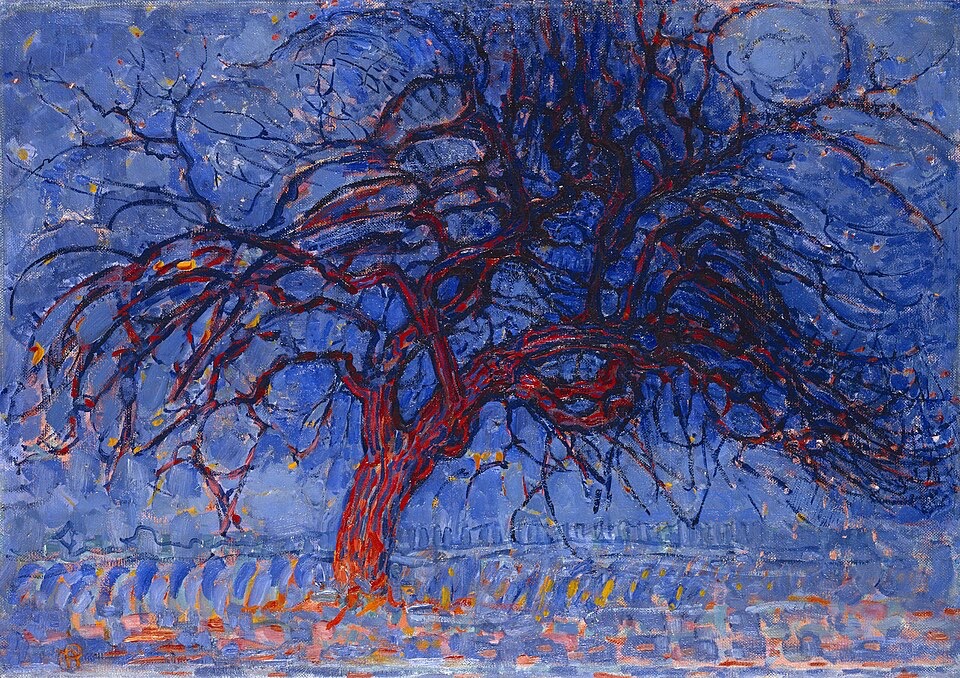
Piet Mondrian’s Evening Red Tree (1908–1910), oil on canvas
Some people think it is not art, but I disagree. Here’s why. Piet Mondrian painted Evening, Red Tree around 1908–1910, it wasn’t as popular as Composition with Red, Blue, and Yellow in 1930.
People hated how it was so simple and how much popularity it got, but he wouldn’t be as popular if he didn’t do that public stunt, and I think that’s what makes it unique about his art even if people did or did not know the meaning or a story behind it.
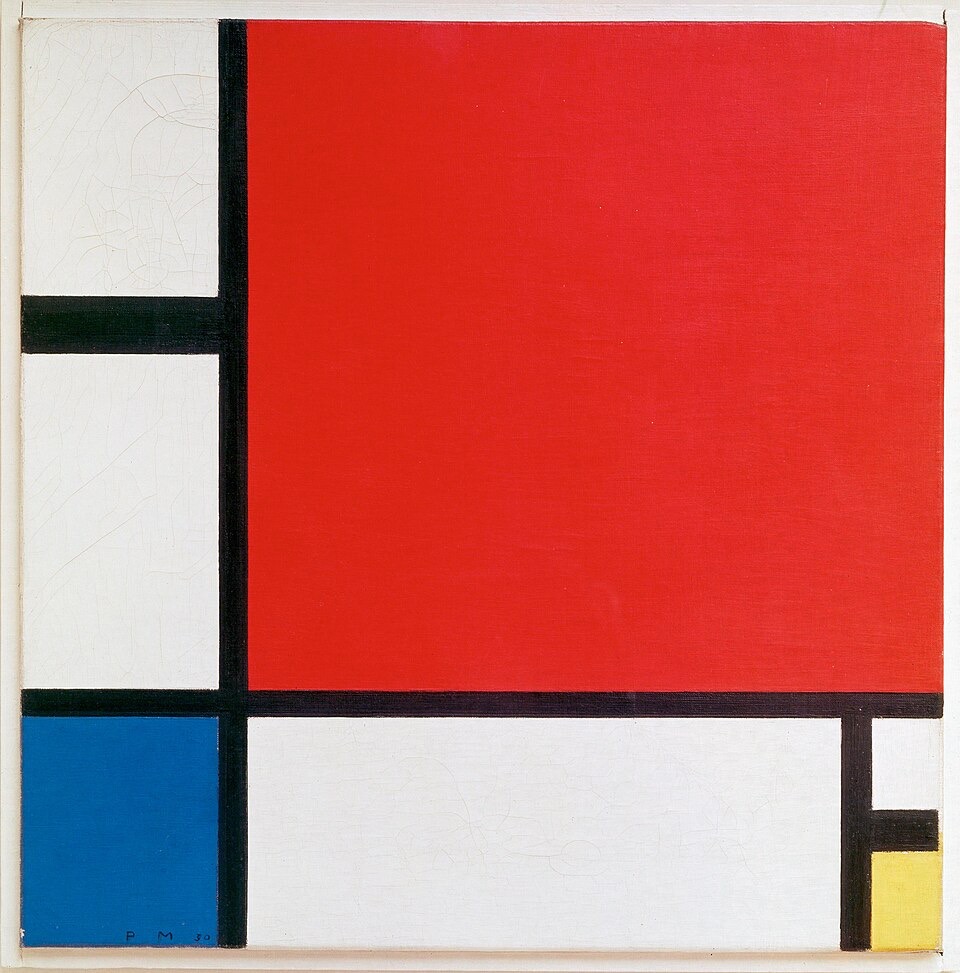
Piet Mondrian, Composition with Red, Blue, and Yellow, 1930, oil on canvas
The same goes with artificial intelligence, another reason why people don’t like artificial intelligence art is because it affects the environment. It uses a lot of clean water at a rapid pace daily, with millions of people wasting more clean water than we did before. Using the clean water to cool down the machines. The difference between them is that AI art doesn’t come from personal experience or human feeling. Mondrian’s work grew from years of practice, choices, and emotion, while AI art is created through data and algorithms. That difference changes how people connect to the art. At the end of the day it is art, but it’s not authentic art.
Working together became Historical Legacy
When China took control of their own art, the Ming dynasty was born (1368-1644). They were trying to restore their own traditions. Ming artists were told to have a form of art style that represented their nation as powerful, kind, and legitimate. This form of art style had to be realistic, with moral messages, big landscapes, flowers, birds, and stories with people. Porcelain became one of the best ways to do that. During this time, the Ming dynasty and Persian/Islamic courts had cross cultural exchange. Islamic cultures gave China the cobalt pigment. China used that pigment to create blue‑and‑white porcelain. China, in return, sent back its own porcelain, silk, and artwork.
China used Persian cobalt, aka “Muslim Blue,” to create a strong vivid blue on white porcelain; it was better than their local cobalt. Ming artists used Persian/Islamic materials but blended them with their nice brush strokes and Chinese symbols to show their art style and identity.
An example of this is the Jar with Dragon, from the early 15th century. This ceramic art piece was made for the emperor during the Xuande reign, painted with Persian cobalt blue, and decorated with a powerful dragon flying through the sky.
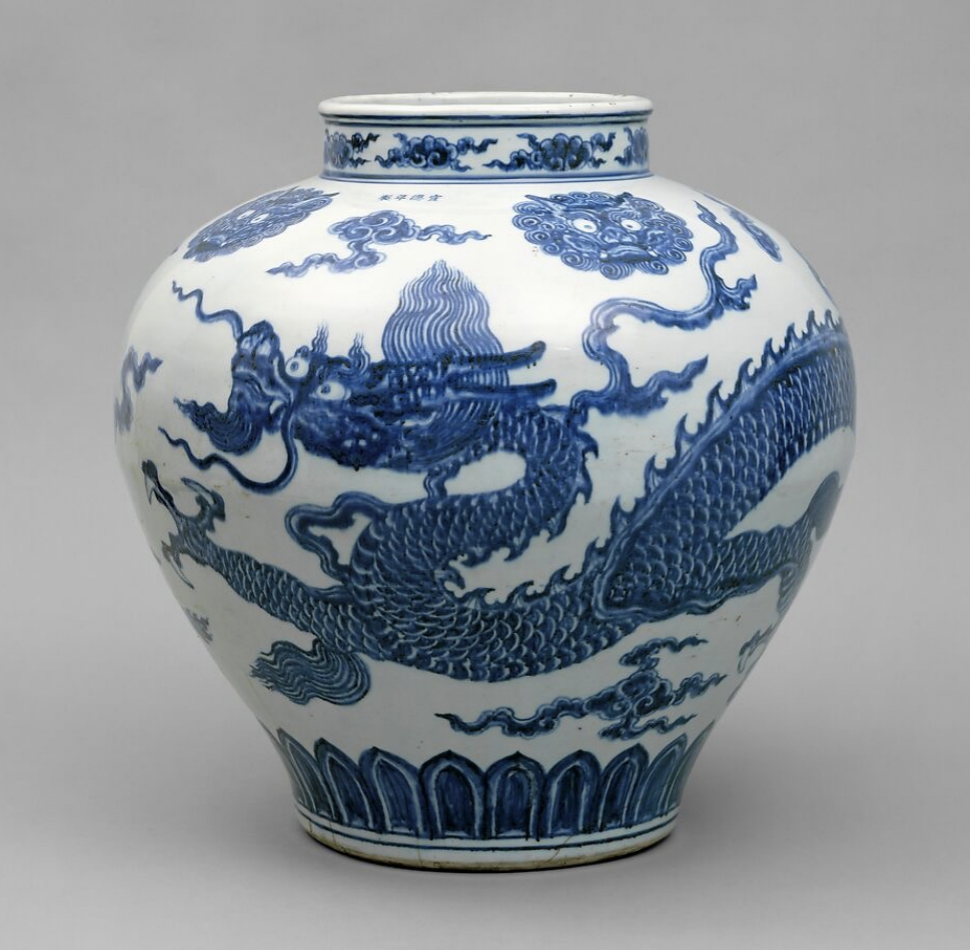
Jar with Dragon, Early 15th Century, Cloisonné Enamel Porcelain, 6 in. diameter
This exchange today is still seen in the world. One of the most well known art styles in ceramic history. Blue‑and‑white porcelain influenced Islamic pottery, European ceramics like Delftware, and even modern home decor.
Clase Azul Reposado Lomeli, 1997, Guadalajara, Jalisco, México 750ml bottle
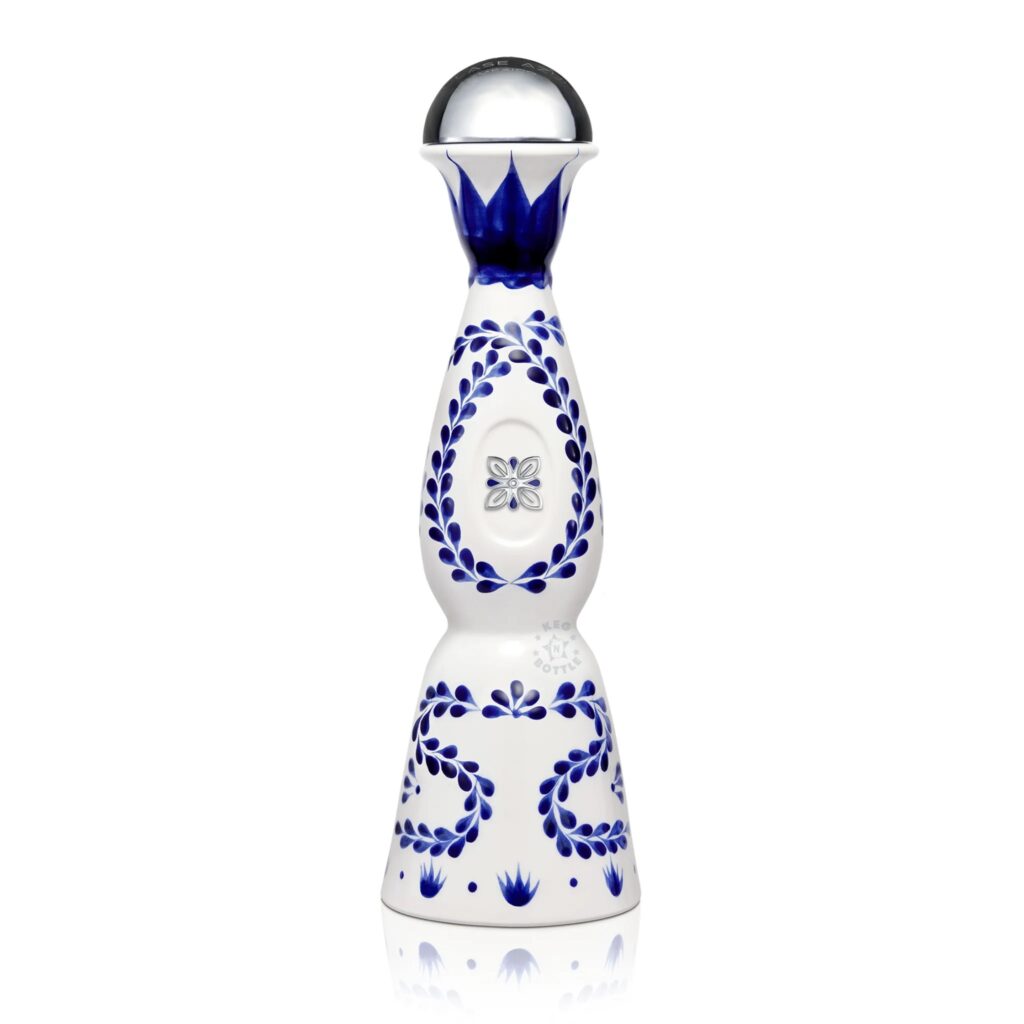
And it even influenced Mexico with its Casa Azul reposado, a tequila that is known for its ceramic feature and expensive price.
What makes this art style so unique is not only the history behind it but also how it’s seen; the attractive bright blue and the simple white complement each other. The flowing techniques and brush strokes also complement it. That’s what makes this art style a historical legacy.
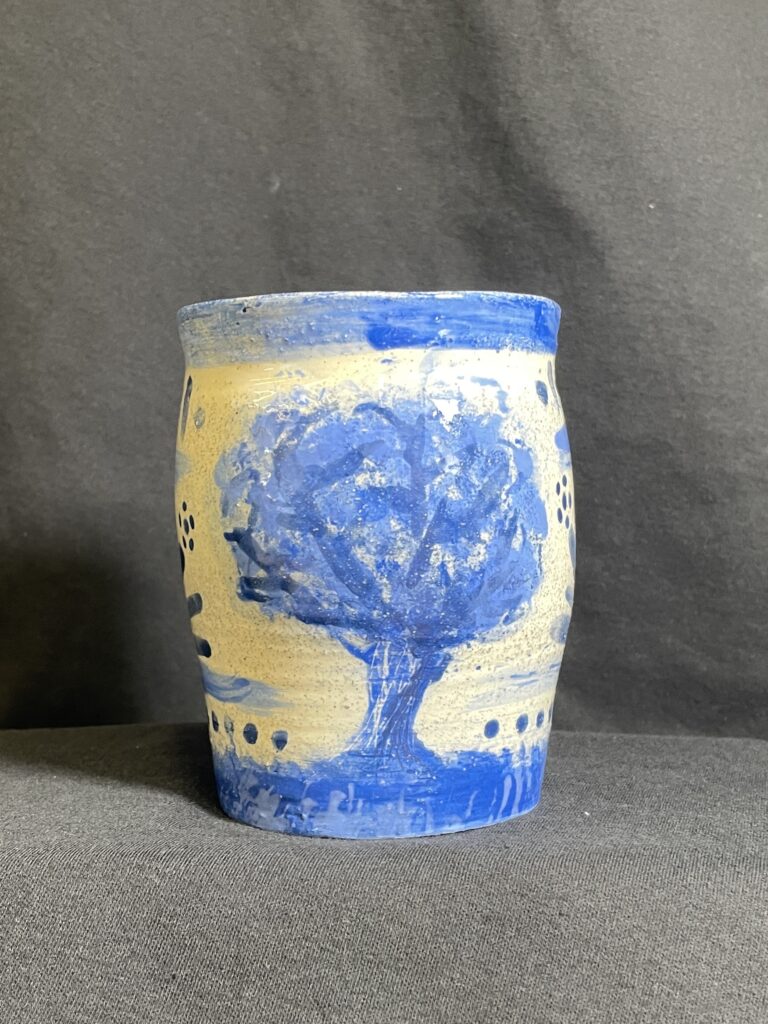
Blue Tree, Dec 2024, Fany Munoz D, ceramics
Why is Frida Kahlo famous?
Frida Kahlo is known for her self portraits because they were her way of exploring her identity and coping with her life. She had a lifetime of health problems due to polio at a young age and a bus accident, and it left her in a bedridden state, where she began painting. Although many of her portraits were her own suffering, her paintings show Mexican history, politics, and art traditions. She was also known for her marriage with famous artist Degio Revria, which was also another reason for her suffering due to him cheating. Her father was a German immigrant, and her mother was Indigenous Mexican. These two cultures would cause her issue of identity
Her famous painting The Two Fridas is a double self portrait of herself. It shows the figure on the left wearing a white European dress covering all her skin except for her arms, but the figure on the right is dressed in traditional Tehuana that reveals more skin. Both have their hearts exposed with veins flowing, connected to a tiny painting of Diego that Mexican Frida holds. European Frida holds scissors next to a cut vein, and it is bleeding onto her white dress.
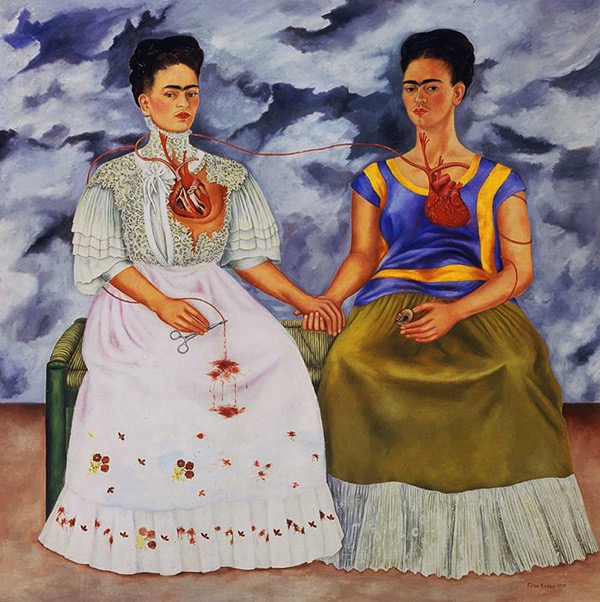
In this painting it shows symbolism of her identity of her two cultures and the relationship with Rivera, which shows Frida who she is. Both of them hold hands as if they accept other.
Frida Kahlo, The Two Fridas (Las dos Fridas), 1939, oil on canvas
Frida Kahlo is cross culture because she is from 2 different backgrounds. The white dress shows Frida’s European side, where women were seen as soft and delicate. The Tehuana dress shows her Indigenous side, linked to strength and a powerful female role. Wearing the Tehuana outfit also connected to Mexican pride. Her legacy today still continues. Mainly because she broke many barriers. including identity politics, her culture, and who she was in life.
Leave a Reply